-1.png?width=250&height=69&name=fridgeseal-logo-full-color-rgb-900px-w-72ppi%20(1)-1.png)
Commercial cooler and freezer door gaskets don't always need to be replaced just because they look dirty.
In grocery stores, restaurants, convenience stores, liquor stores, gas stations, and other food service businesses, cooler door gaskets are constantly exposed to spills, grease, food residue, dust, and moisture.
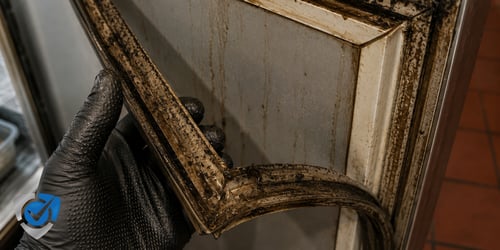
Over time, that buildup can make gaskets look worn even when they're still capable of creating a good seal.
Regular cleaning can help keep commercial refrigeration doors looking better and give you an opportunity to spot gasket problems early. But how you clean them matters.
Using harsh chemicals or abrasive cleaning tools can damage gasket material and shorten its useful life.
Here's what businesses should know about properly cleaning and maintaining commercial cooler and freezer door gaskets.
Why Commercial Cooler Door Gaskets Get So Dirty
A commercial refrigeration gasket has a tough job.
Every time the door opens, the gasket is exposed to the surrounding environment. Employees handle the doors while stocking products, customers open glass reach-in coolers throughout the day, and food or beverages can spill around the door opening.
The folds in a gasket can also collect debris that isn't immediately visible.
Depending on the environment, you may find:
- Food residue
- Grease
- Sticky beverage spills
- Dust and dirt
- Moisture
- Mold or mildew buildup
A gasket may look fine from several feet away while hiding significant buildup inside its folds.
That's why gasket cleaning should be part of regular commercial refrigeration maintenance.
Start With a Gentle Cleaning Approach
Commercial cooler door gaskets are flexible because they need to compress against the door frame and create a seal.
That means they shouldn't be treated like a hard piece of equipment that can simply be scrubbed aggressively.
For routine cleaning, warm water and mild dish soap are a good place to start. A diluted vinegar and water solution is also commonly used for certain types of buildup, but it's always a good idea to follow the equipment manufacturer's cleaning recommendations.
Use a soft cloth, sponge, or soft-bristled brush to gently work around the gasket, paying particular attention to the folds and corners where residue tends to collect.
Avoid aggressively pulling on the gasket while cleaning. Repeatedly stretching the material away from the door can place unnecessary stress on the gasket and its mounting area.
Stay Away From Harsh Chemicals and Abrasive Scrubbers
When a gasket is heavily stained or dirty, reaching for a stronger chemical may seem like the fastest solution.
That's not always a good idea.
Bleach, chlorine-based cleaners, strong solvents, and other harsh chemicals may damage or degrade some gasket materials over time. Unless the equipment or gasket manufacturer specifically recommends a product, a gentler cleaning method is the safer choice.
Abrasive scrubbers can also cause problems.
Steel wool, aggressive scouring pads, sharp scrapers, and other abrasive tools can scratch, cut, or tear the flexible gasket material.
A small nick may not look serious at first, but repeated opening and closing can turn it into a much larger tear.
When cleaning commercial cooler door gaskets, the goal is simple: remove the buildup without damaging the gasket.
Don't Forget the Gasket Folds
One of the easiest places to miss is inside the gasket itself.
Commercial refrigeration gaskets have folds that allow them to flex and compress when the door closes. Those same folds can trap moisture, crumbs, sticky residue, and other debris.
Gently separate the folds enough to inspect and clean them without excessively stretching the gasket.
This is also a good time to look for small tears.
A tear beginning inside a fold may not be noticeable when the door is closed, but it can continue to grow as the gasket is opened, compressed, and cleaned.
Catching that damage early gives you a better idea of which gaskets may need replacement soon.
Clean the Surface the Gasket Seals Against
Cleaning the gasket is only half of the job.
The surface where the gasket makes contact with the cooler or freezer should also be kept clean.
Sticky residue, food debris, or heavy buildup on the frame can interfere with how evenly the gasket contacts the surface.
After cleaning the gasket, wipe down the mating surface around the door opening.
Once everything is clean, close the door and look at the gasket from several angles.
It should make consistent contact around the opening without obvious gaps.
If the gasket is clean but the door still isn't sealing correctly, there may be another issue with the gasket, door alignment, hinges, or closing hardware.
Our Commercial Gasket Services cover more than simply installing a replacement gasket. We evaluate how the door is operating and sealing so the actual problem can be identified.
Cleaning Is Also an Inspection Opportunity
One of the biggest benefits of regularly cleaning cooler door gaskets is that you're already examining the entire gasket.
Take advantage of it.
While cleaning, look for:
- Tears or splits
- Cracked corners
- Loose sections
- Areas pulling away from the door
- Gaskets that have become stiff or deformed
- Gaps between the gasket and frame
Then open and close the door a few times.
Does it close properly?
Does the gasket make contact all the way around?
Is one corner noticeably different from the others?
Does the door need to be pushed shut?
These simple observations can reveal problems before they become more serious.
For a broader look at what should be inspected, our Preventative Maintenance Checklist for Commercial Cooler Doors covers gaskets, door operation, hardware, and other common trouble areas.
When Cleaning Won't Fix the Problem
Cleaning can improve the appearance of a gasket and remove buildup, but it can't repair physical damage.
A torn gasket is still torn after it's clean.
A gasket that's no longer making contact with the frame won't necessarily begin sealing again because residue was removed.
And a door that's sagging or failing to close properly may have a hardware problem rather than a gasket problem.
If you can see daylight through a gap, feel cold air escaping, notice condensation around the door, or find sections of gasket that are torn or hanging loose, it's probably time to investigate further.
Our article How Often Should Commercial Cooler Door Gaskets Be Replaced? explains why there isn't one replacement schedule for every business and which signs indicate that a gasket is reaching the end of its useful life.
How Often Should Commercial Cooler Door Gaskets Be Cleaned?
There isn't one cleaning schedule that works for every business.
A low-traffic cooler in a storage area has very different conditions than a glass beverage cooler being opened constantly in a busy convenience store.
Instead of waiting until gaskets look dirty, include them in your regular cleaning and inspection routine.
High-traffic doors and refrigeration equipment exposed to food, grease, or frequent spills should naturally be checked more often.
The important thing is consistency.
Regular attention makes it easier to remove buildup before it becomes difficult to clean and gives employees more opportunities to identify damage early.
Clean Gaskets Help You See the Real Condition of the Door
A dirty gasket isn't necessarily a bad gasket.
And a clean gasket isn't necessarily a good one.
Cleaning simply gives you a better opportunity to see what's actually happening.
Once the dirt, grease, and residue are removed, you can more easily identify tears, loose corners, deformation, or areas where the gasket isn't making proper contact.
That's where routine cleaning and professional inspection work together.
At FridgeSeal, we specialize in commercial cooler and freezer door gaskets and components. If you're unsure whether your gaskets simply need cleaning or are ready for replacement, we can help evaluate their condition and determine what actually needs attention.
Visit our Commercial Cooler Door Gasket Replacement page to learn more about our services for businesses throughout Southeast Michigan.