-1.png?width=250&height=69&name=fridgeseal-logo-full-color-rgb-900px-w-72ppi%20(1)-1.png)
Walk-in cooler and freezer doors are designed to close automatically for a reason. In busy commercial environments, doors are constantly being opened and closed throughout the day. Without a properly functioning auto closer, those doors may not shut completely, leading to airflow problems, temperature fluctuations, and unnecessary strain on refrigeration systems.
The challenge is that auto closers often fail gradually. Many businesses don’t notice the issue right away because the door still “kind of” closes. Over time, however, small problems become larger ones that impact performance and energy efficiency.
Knowing what to look for can help you catch these issues early and avoid more serious problems.
What a Walk-In Door Auto Closer Actually Does
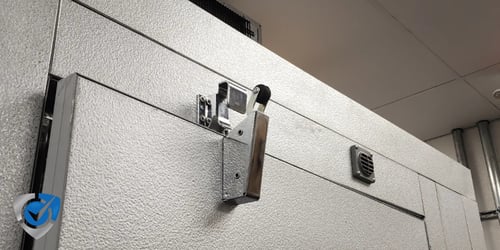
An auto closer is responsible for pulling the door fully shut after it has been opened. It ensures that the door seals tightly against the frame every time.
Without a properly functioning closer, doors may:
- stop short of fully closing
- bounce back open slightly
- close too slowly or unevenly
Even a small gap can allow warm air to enter and cold air to escape continuously.
This is why auto closers play a critical role in maintaining proper refrigeration performance.
Signs Your Auto Closer Is Failing
Auto closers rarely stop working all at once. Instead, they begin to show small signs that are easy to overlook.
The Door Doesn’t Fully Close
One of the most common signs is a door that stops just short of sealing. It may look closed, but it isn’t tight against the gasket.
The Door Needs to Be Pushed Shut
If staff have to manually push the door to get it to seal, the closer is no longer doing its job.
The Door Closes Too Slowly
A weak closer may take too long to pull the door shut, especially in high-traffic environments where speed matters.
The Door Slams Shut
In some cases, closers fail in the opposite direction and cause doors to slam. This can damage hinges, frames, and gaskets over time.
The Door Pops Back Open
If a door closes and then slightly reopens, it’s often a sign that the closer or alignment is off.
These issues may seem minor, but they all lead to the same result: the door is not sealing properly.
Why Auto Closer Problems Get Worse Over Time
Once an auto closer starts to fail, the problem rarely stays the same.
As the door stops sealing consistently:
- warm air enters the walk-in
- moisture builds up
- frost and ice can form
- the refrigeration system works harder
At the same time, the door itself experiences more wear. Hinges, gaskets, and frames are all affected when the door is not closing correctly.
Over time, what started as a small issue can lead to larger repairs.
How Auto Closers Impact Energy Efficiency
When a walk-in door doesn’t close fully, cold air escapes continuously. This forces the refrigeration system to run longer to maintain temperature.
Even small gaps can create significant energy loss over time.
This is one reason why energy efficiency programs often focus on door performance rather than just equipment replacement.
In fact, improvements to door components such as auto closers, gaskets, and airflow control can play a major role in reducing unnecessary energy use.
For many Michigan businesses, upgrades like walk-in door closers may qualify under the DTE Energy Efficiency Program, which helps support improvements that reduce energy waste.
You can learn more about how this program works on our Energy Efficiency Programs page.
Why Auto Closers Are Often Overlooked
Auto closers are one of the most overlooked parts of a walk-in door system.
Unlike a torn gasket or visible ice buildup, a failing closer is less obvious. The door still moves, so it’s easy to assume everything is working properly.
In reality, even a slightly misadjusted or worn closer can prevent the door from sealing correctly.
Because of this, many businesses don’t address the issue until it begins to affect temperature or daily operations.
The Connection Between Closers, Gaskets, and Door Performance
Auto closers, gaskets, and door alignment all work together as a system.
If one part is not functioning properly, the others are affected.
For example:
- A weak closer may prevent the gasket from sealing fully
- A misaligned door can cause uneven pressure on the gasket
- A worn gasket can make it harder for the closer to pull the door shut
This is why it’s important to evaluate the entire door system rather than focusing on a single component.
You can learn more about how we approach this on our Commercial Gasket Services page.
When It’s Time to Replace or Adjust a Closer
If your walk-in door is showing any of the warning signs mentioned above, it’s worth having the closer inspected.
In some cases, a simple adjustment can restore proper function. In others, the closer may need to be replaced.
The key is to address the issue early before it leads to additional wear on the door or refrigeration system.
In "Closing"
Walk-in door auto closers play a critical role in keeping refrigeration systems operating efficiently. When they begin to fail, even small gaps at the door can lead to energy loss, temperature instability, and increased equipment strain.
Because these issues often develop gradually, they are easy to overlook until they become more noticeable.
Taking the time to identify and address auto closer problems early helps protect your equipment, reduce energy waste, and maintain consistent performance.