
A torn commercial cooler door gasket is one of the most common problems we see in grocery stores, convenience stores, restaurants, liquor stores, gas stations, and other businesses with commercial refrigeration.
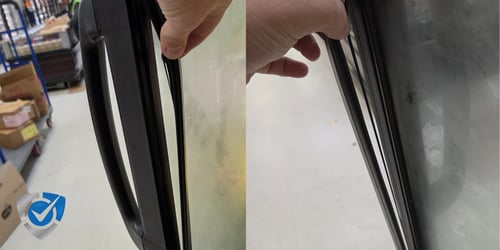
Sometimes the damage looks minor. A small split appears in one corner or along the side of the gasket.
But that small tear never gets smaller.
As the door continues to open and close, the damaged area can spread until a section of the gasket is hanging loose or no longer creating a proper seal.
So why do commercial cooler door gaskets tear in the first place?
Normal wear is certainly part of it, but many torn gaskets are also caused by the way doors are used, cleaned, and maintained every day.
Understanding what causes the damage can help businesses extend gasket life and catch problems before a small tear becomes a much larger one.
Holding the Door Open With a Foot or Elbow
This is one of the biggest causes of gasket damage we see.
Employees stocking a cooler often need both hands free. Customers may also be carrying several items at once.
The easiest solution is often to hold the cooler door open with a foot, knee, hip, or elbow.
It seems harmless, but repeatedly pressing against the edge of the door can put pressure directly on the gasket.
The gasket is designed to compress against the cooler frame when the door closes. It isn't designed to support someone's body weight or be repeatedly pushed sideways.
Over time, this can stretch the gasket, separate the folds, or create small tears that eventually become much larger.
If employees frequently stock through cooler doors, encouraging them to use the handle and avoid leaning against the gasket can help reduce unnecessary wear.
Carts, Boxes, and Products Can Hit the Gasket
Commercial refrigeration areas are busy.
Employees are moving carts, stocking shelves, carrying cases of beverages, unloading boxes, and moving products through cooler and freezer doors.
All it takes is the edge of a box, cart, tray, or product repeatedly catching the gasket to begin damaging it.
This is especially common near the lower portions and corners of doors where damage isn't always immediately noticeable.
A small cut caused by a stocking cart may not affect the seal right away. But once the gasket material has been compromised, normal opening and closing can cause the tear to spread.
If the same gasket keeps becoming damaged in the same location, it's worth looking at how employees are using and stocking that particular cooler.
A Sagging or Misaligned Door Can Tear a Good Gasket
Sometimes the gasket isn't the original problem.
If a cooler door begins to sag or move out of alignment, the gasket may rub against the frame every time the door opens and closes.
Instead of compressing evenly against the frame, part of the gasket may drag, fold, pinch, or catch.
Do that hundreds of times and even a relatively new gasket can become damaged.
This is why replacing a torn gasket without checking the condition of the door can sometimes lead to another torn gasket later.
Our article Why Is My Commercial Cooler Door Sagging? explains how worn hinges, loose hardware, and alignment problems can affect the way a commercial refrigeration door operates.
At FridgeSeal, our Commercial Gasket Services include evaluating how the door is closing and sealing, not simply replacing the damaged gasket.
Ice Buildup Can Make Gasket Problems Worse
Ice around a commercial freezer door can create another problem for the gasket.
When moisture freezes around the door opening or gasket, the gasket can become stiff and less flexible. In some situations, the gasket may even freeze against the surface it seals against.
Then someone opens the door.
Instead of the gasket releasing normally, the frozen material may be pulled, stretched, or damaged.
Repeated freezing and pulling can eventually contribute to cracks and tears, especially if the gasket is already older or beginning to deteriorate.
If you're regularly seeing ice around a freezer door, don't simply remove the ice and forget about it.
Ice buildup can be a sign that warm, humid air is getting into the freezer.
Our article Why Is There Ice Building Up Around My Freezer Door? explains some of the common reasons this happens and why the underlying cause should be addressed.
The Wrong Cleaning Method Can Damage Gaskets
Cleaning cooler and freezer door gaskets is important.
How they're cleaned matters too.
Harsh chemicals, abrasive scrubbers, sharp tools, and aggressive cleaning can damage the flexible gasket material.
For example, repeatedly using harsh chlorine or bleach-based cleaners may not be appropriate for some gasket materials. Aggressive scouring pads or sharp tools can also nick or cut the gasket.
Once there's a small cut, normal use can turn it into a larger tear.
A gentler approach is usually better. Warm water with mild dish soap and a soft cloth, sponge, or soft-bristled brush is a good starting point for routine cleaning. Always follow the equipment manufacturer's recommendations when available.
We cover this in more detail in How to Clean Commercial Cooler Door Gaskets Without Damaging Them.
Pulling on the Gasket Can Stretch or Tear It
Sometimes employees grab the edge of a gasket while cleaning, stocking, or trying to remove something caught behind it.
Commercial gaskets are flexible, but they're not designed to be handles.
Repeatedly pulling the gasket away from the door can stretch the material or damage the area where the gasket attaches.
This can cause sections to become loose, distorted, or eventually torn.
When cleaning inside the gasket folds, gently separate them only as much as necessary rather than pulling the gasket away from the door.
An Incorrect Gasket Can Wear Prematurely
Not every replacement gasket is the same.
Commercial cooler and freezer doors use different gasket profiles, mounting styles, and dimensions.
If a replacement is slightly too large, too small, or the wrong profile, it may not sit correctly on the door.
That can create excessive stretching, bunching, rubbing, or uneven compression.
Over time, those conditions can contribute to premature wear.
This is one reason accurate measurements and proper gasket identification matter. Even a relatively small difference can affect how the replacement fits and seals.
Our article Measuring Commercial Cooler Door Gaskets: Why Precision Matters explains why getting the correct size and profile is so important.
Sometimes Gaskets Simply Wear Out
Not every torn gasket is caused by misuse or another door problem.
Commercial refrigeration gaskets are wear items.
Every day they're compressed, released, pulled, exposed to temperature changes, cleaned, and subjected to constant door movement.
Eventually, the material can become less flexible.
Older gaskets may become stiff, cracked, brittle, or permanently deformed. Once that happens, it doesn't take much additional stress for a tear to develop.
High-traffic doors naturally tend to experience this wear faster than doors that are rarely opened.
The goal isn't to make a gasket last forever. It's to avoid unnecessary damage and replace it when it can no longer do its job properly.
Don't Ignore a Small Tear
One of the biggest mistakes businesses make is waiting until a gasket is completely falling apart before replacing it.
A small tear may still allow the door to close, but the damaged area can continue spreading.
As the gasket deteriorates, it may stop making consistent contact with the frame and allow warm air to enter the refrigerated space.
If you notice a torn section, loose corner, exposed magnet, or an area where the gasket no longer sits correctly, it's worth having the door evaluated.
Find Out Why the Gasket Tore
When we see a damaged gasket, we're not only interested in replacing it.
We also want to know why it became damaged.
Was it simply old?
Is the door sagging?
Is the gasket rubbing against the frame?
Is ice repeatedly forming around it?
Is the wrong gasket installed?
Or is something happening during daily use that's causing repeated damage?
Finding the cause can help prevent the replacement gasket from ending up in exactly the same condition.
At FridgeSeal, we specialize in commercial cooler and freezer door gaskets, seals, and components for businesses throughout Southeast Michigan.